
Do you ever feel.....
Not my favorite song, but appropriate

After a much needed sabbatical, I’m feeling a bit refreshed and excited to hop back into bringing you new journal entries. This first bit may be a 3 part mini review of the time I spent away, with a deep dive into the research I was doing for my paper and other projects that were happening simultaneously.
So let’s jump in!
You mentioned research ages ago, what was it about??
A couple months back, I mentioned that my final project and paper was focusing on fossil based or biobased plastic grocery bags being a more sustainable option. My team spent a lot of time researching different methods for end-of-life (EOL) pathways, raw material feedstock processing, and the costs associated between three different types of polymers. Our research not only included the environmental impacts, but we looked into the social and economic impacts as well. We compared polyethylene (PE), biobased polyethylene (bio-PE), and biodegradable polylactic acid (PLA). In our final findings, we conducted a comparative life cycle assessment (LCA) based on other academic paper findings. Our proposal and final recommendation aimed to provide options for a more circular waste stream.
Giving you a high level summary, each polymer has its own benefits, but more importantly they each have an EOL route that tends to be most common, causing their impacts to differ. This is typically caused by lack of infrastructure for preferred methods of “disposal”, as well as a lack of streamlined regulations and consumer adoption.
So I’m sure you’re thinking, well if it’s biobased or biodegradable, that means it should be more sustainable, right? Unfortunately, that’s not always the case. So let’s look at our two options, bio-PE and PLA, before we hop into our conventional fossil based PE.
Bio-PE
You may have heard of bio-PE, bio-polyethylene, or some variation of a biobased plastic. What’s great about it is that it’s chemical makeup is exactly the same as conventional PE, but it’s made from natural resources like corn or sugarcane. The huge thing to remember about it though is that it is not biodegradable even though it’s biobased….. That’s a big moment to pause and take it in. (I have briefly touched on this back in two of my entries that I’ll add below in case you missed them.) Here’s the kicker. Just because it’s made of something natural doesn’t mean that it always has the ability to naturally breakdown without additional external forces. Bioplastic is a generic term for biomass plastics, leading us to either biobased or biodegradable (Uehara et al., 2023). Biobased means that the materials used to create the product are mostly naturally derived from biomass or plant material that can produced through chemical synthesis, like bio-PE. Biodegradable means that a product will naturally decay or breakdown to its component parts over time without too many toxic adverse affects (hopefully), leading us to the EOL pathways.
Bio-PE can be recycled right along with conventional PE in the same stream because, like I said, the chemical makeup and structure is the same, which is a beautiful thing in terms of its recyclability. In essence, think of it as the same as conventional PE. The biggest difference is that when it’s recycled, bio-PE demonstrates a 3.9 kg CO2/kg of bio-PE uptake when recycled compared to conventional PE (Benevides et al., 2020), roughly amounting to 4.2x less the amount of CO2 emissions equivalent. It can’t be composted, but it can most certainly be reused, end up in landfill, or incinerated.
Now, here’s where else it gets interesting. Like conventional PE, if it is not properly cleaned or if there is limited access to recycling, it will most likely end up in landfill…That’s the unfortunate truth. But because it’s chemically stable, it won’t biodegrade for years; and in that time period, sitting in landfill, it may release less CO2 equivalent (16.57 kg) than its counterpart (18.4 kg) by about 2 kg, giving it a lower carbon footprint (Lacerda et al., 2024). But considering how water and land intensive agricultural practices for growing corn or sugarcane can be, increases its environmental footprint.
PLA
Now, PLA has some of these similar challenges as bio-PE, especially considering its environmental impacts. In a perfect world, PLA would be carbon neutral due to it being made from corn and then it properly being composted, returning back to the Earth as nutrients. The challenge is, especially in the US, that the infrastructure for commercial composting facilities is very small. I had the opportunity to interview some major players in the Cincinnati region, like GoZero, and learned so much from them and from the research about PLA’s entry into a composting stream.
Due to the lack of infrastructure and regulation, there is not a great deal of collection for PLA, unless you live on the West Coast, in the Colorado region, or parts of the North East. The Midwest has more Class 2 and up facilities, but not all of them take biodegradable plastics. Plus, not all plastics are created equal, or rather labeled appropriately. Nor can they be composted in your backyard. And because of these challenges, these bags tend to end up in the landfill as well, generating more CO2 emissions (44.87 kg CO2 eq) than was intended for them in the beginning, as well as our favorite thing to talk about….MICROPLASTICS…..
Naturally as something breaks down it has to fragment. But unfortunately, if a PLA bag isn’t composted properly, or is not truly biodegradable PLA, those fragments end up proliferating. However, if disposed of correctly, there hasn’t been as much negative data raising large amounts of concern. But then again, back to its overall footprint, it can be initially energy and water intensive, yet has the potential to be closer to net zero if composted correctly.
Conventional PE
Now onto the type of plastic that has the worst reputation, mainly for the amount of it out there and its lack of ability/accessibility to be recycled…fossil fuel based PE. Of course, it has all of the usual suspects for impacting the environment. However, it’s actually less energy and water intensive than the other two polymers we explored, although we found that the extrusion stage for all plastics takes about the same amount of energy at 0.457 KJ/kg (Benavides et al., 2020). If PE enters the proper waste stream, it can be recycled or be reused for a number of times. National grocer and store programs that offer incentives to their customers have really begun tapping into what it takes to make these types of bags more circular.
So what did we end up recommending?
Here’s the sad truth about the way things have been set up….PE bags were “more sustainable”. We ended up recommending a three phase approach to address the nuances of each polymer and aid the transition from linear to a more circular approach. However, the first step concluded that PE bags kept in use through incentive return programs was the best option to reducing environmental impacts. Plus, the production of PE bags is much cheaper than that of either biobased options. Across all three polymer categories, reuse had the lowest impact (Civancik-Uslu et al., 2019), which I’m sure seems like a no brainer. A bag that is later used as a waste bin liner still has less impact than if it was used one time.
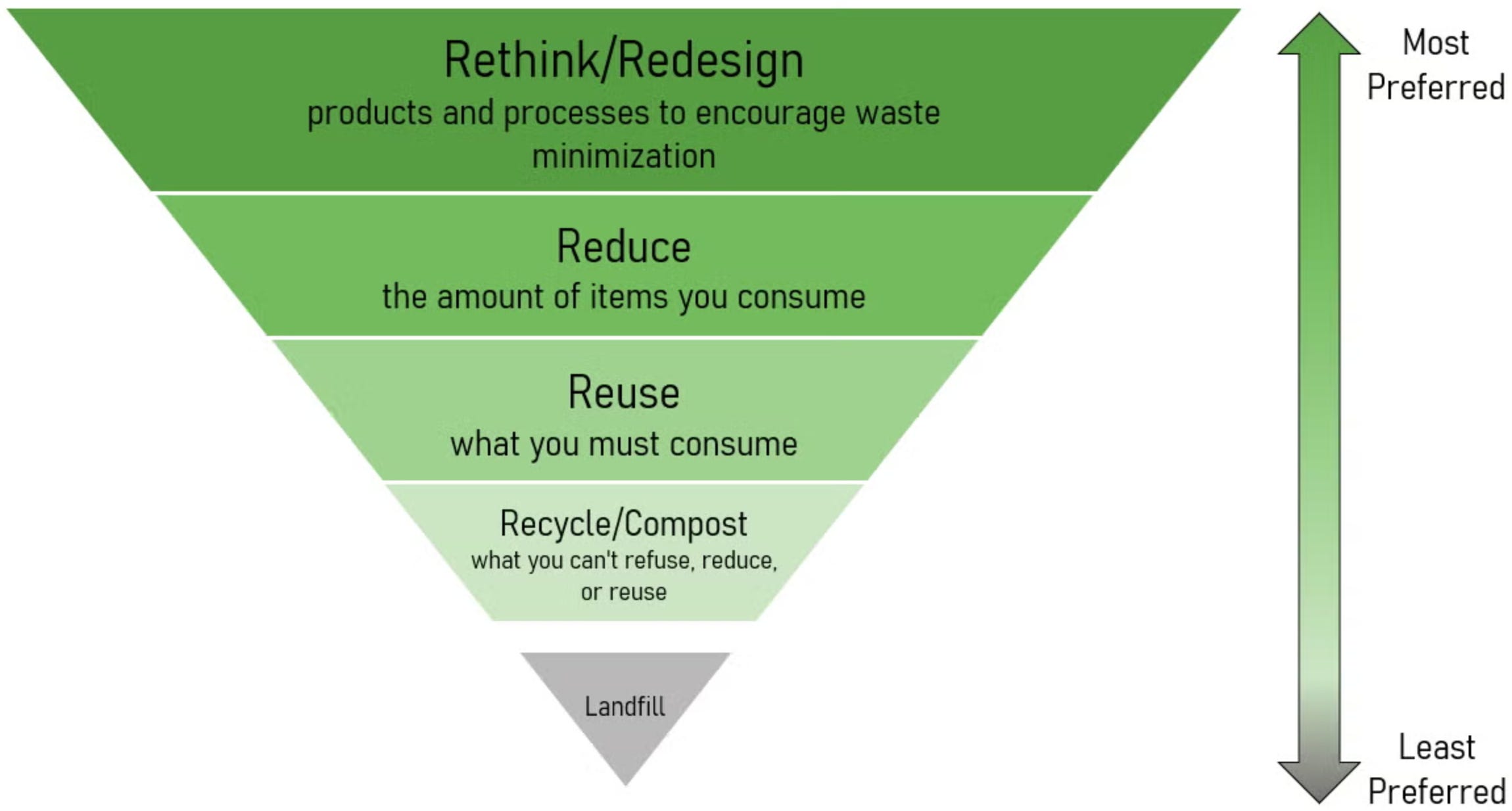
But this showed us that consumer adoption, accessibility, and convenience are the keys to adoption as much as consistent messaging and education. Simple things like remembering to bring that stack of bags back to the store or place some of your reusable ones in the car so that you’re not grabbing another set can go a long way. There are times I catch myself forgetting my bags and then opt out of shopping, unless I can’t wait another day. But by creating tiny habits and changing our point of view, we can help make the wave of change move a bit faster while creating positive environmental and social impacts.
Regulation and policy changes also influence the EOL pathway and the rate of adoption to properly sort, or place items, in the best waste stream. Compared to the US, countries withing the EU have set up multi-stream recycling pathways where citizens sort their waste before it’s collected, whereas here we operate on a single-stream system where everything gets dumped in all together, making sorting less cost effective and recycling harder due to higher chances for contamination.
In the end, replacing one plastic and implementing new systems is as much a social and economic challenge as it is an environmental one.
So as you can see, my brain was at capacity (nervously laughing lol). But I learned a ton from working with my team and choosing this project to work on. And all the while, I was also sewing my life away….mostly at the end of the semester…because of course, that’s what I do.
So next time, I’ll share with you all about the collection I designed for Columbia Fashion Week’s Met Gala.
Until then, challenge yourself to create a new habit.
In case you wanted to look back at a few of those entries where I mentioned my thoughts on plastics, here they are: (Also, if you’re feeling like reading academic papers, feel free to click on the links referenced throughout!)


