
Sustainability Reporting
Learning as I go

Before I even get started, I’m just going to preference that this entry may get a little numerically and info heavy…
Ok, now that that’s out of the way, let’s get into this.
As you may or may not know, I implemented take-back and donation (closet cleanout) programs in 2024 for Am.A-line through The Again Co. Since launching my Rewind program, I’ve had a few donation drop-offs more than trade-ins. With that, along with learning more about LCA’s and how to conduct certain analyses and footprint data, I’ve been slowly working to make my own impact report for the brand.
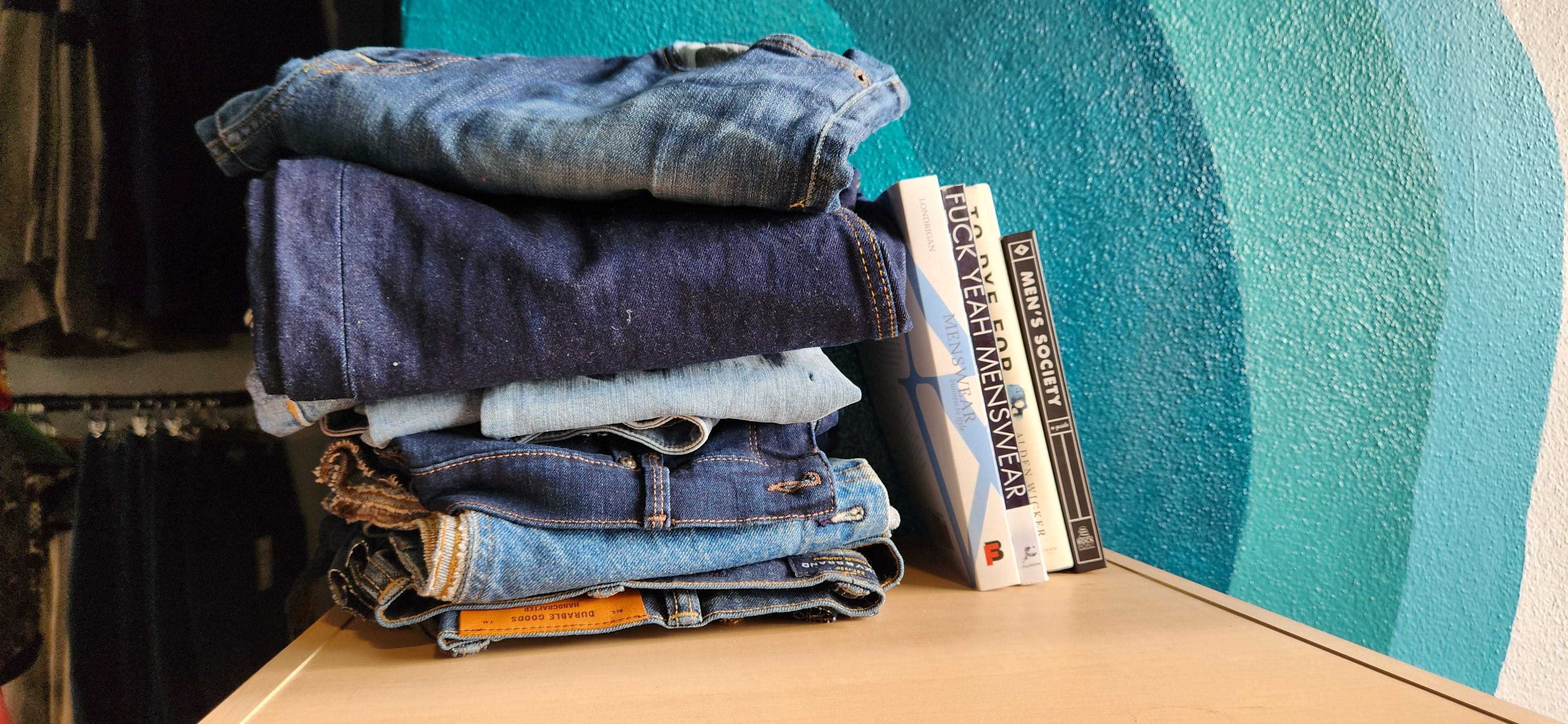
And because I felt like the number was so insignificant when I started weighing everything last year around this time, I missed sharing my initial report as far as what was diverted from landfill. So let’s start with the simple numbers:
In 2024, (with my small scale) Am.A-line Collections diverted 26.5 lbs of a combination of clothing and textile scrap from landfill.
Now that I’m gearing up my report for 2025 (which I’ve learned now needs to be an ongoing thing), and as I look for other storage options, I’ve started calculating what was diverted again. So far, I’ve weighed roughly 96.2 lbs of clothing that I took in last year and that’s not even including my scrap or a few stragglers I’ve missed yet. Matter of fact, I didn’t even think about weighing the deadstock/gifted fabric I got from people and companies offloading. So that will be added to my report.
Anyway, this is one of the more simple pieces of data to share. But now I have to get into the nitty gritty that I was starting to work on the year before and didn’t complete…my carbon footprint and other potential key data drivers. Yes, you can argue that as a small, 1 woman brand, that I may not need to go as in depth as a corporation. I can’t argue that. However, I believe in setting myself and my brand up for the future; and, starting with the data that I can now is better than having to go back and scrounge it up later. (Something I’ve also already learned.)
Well in the midst of that, I’m also working on an impact report for my job and currently working towards calculating the carbon footprint. So let me get into what this even means because I think we all have a tendency to hear these terms now and just nod our heads because there’s a level of acknowledgement since we’ve heard about it so many times.
When a company reports on its sustainability metrics, there are a number of ways to do this. The most commonly reported and focused metric is the carbon footprint, which is also synonymous with global warming potential (GWP). The carbon footprint is a calculation as to how much of a gas emission is in the atmosphere related to carbon as the base compound to compare to, resulting in X kg CO2 equivalent (eq). The GWP measures other gas emissions as well like methane (CH4) and ozone depleting chemicals. Most importantly, the difference in GWP relates to the use of a time horizon assigned for the calculations, usually between 20, 100, and 500 years.

So for me, I’m mainly looking to conduct a carbon footprint for the materials I have information on about where they came from. For the clothes I’ve had donated, I may have to guestimate where they were received from. Luckily, most of the clothing that has come in has been dropped off from around the city, or given to me directly when I’ve been in another location. So I’ll be able to calculate that. It’s the other metrics I may not be able to dive too deep into at the moment, but I will get there and yall will be so tired from hearing about these numbers.
Which leads me back to sustainability metrics and the general public. As I was mentioning earlier, I think to a degree we’ve all become so numb to what is being reported because not everyone understands what it actually means. You hear and see terms like “net zero”, “carbon neutral”, “carbon negative”, and so on like everyone gets it. Each one of these emission goals is important and amazing when they can be achieved, which is a feat in itself considering how hard it is to mitigate the amount of carbon emissions produced. That’s where carbon capture technology and storage comes into play. (If you missed my journal entry touching on carbon capture and sequestration technology, don’t worry, you can always catch up on it later.)
Though sustainability and circularity are moving into a high metrics based reporting, it feels like we’re losing some of the personal touch to what connects us to one another. Numbers are a language from many people, but not for everyone. My question is, how can we keep the numbers but make them tangible and familiar enough in a way that doesn’t cause reactionary harm but could feel like an embrace to progress and community?
…
…
I just had to let that one sit for a moment.
…
…
I think that will be something I explore over the next year and report back to you all with what I find.
But on another note, another Looped In episode dropped on Spotify! Where I get into a little bit of this entry but touch on other topics as well. I’d love to have you join me there as well and any video interviews will be posted individually here on Substack as well!
I think that’s where I’ll end this week’s entry before I dive into another rabbit hole.
Until next time, don’t fight positive change but embrace it.